

Modern industrial systems are under increasing pressure to reduce dependence on virgin fossil resources while simultaneously managing escalating volumes of heterogeneous waste. In this context, pyrolysis plants have emerged as a thermochemical bridge between waste generation and resource regeneration. By operating in an oxygen-limited environment, they decompose complex polymeric and carbon-based materials into usable fractions such as pyrolysis oil, syngas, and solid char. This transformation is not merely a disposal pathway. It is a controlled molecular reconfiguration process that reintroduces end-of-life materials into productive cycles. The role of pyrolysis equipment in this framework is becoming increasingly central, particularly as industries pursue closed-loop material ecosystems. The process is adaptable, scalable, and capable of handling diverse feedstocks with minimal preprocessing requirements. Its relevance spans across plastics, rubber, and contaminated industrial residues, making it a cornerstone technology for circular economy infrastructure.
Pyrolysis as a Material Revalorization Engine
At its core, pyrolysis functions as a material revalorization engine. Waste polymers that would otherwise persist for decades in landfills are thermally cracked into shorter hydrocarbon chains. The resulting outputs can be refined into fuels or chemical feedstocks, effectively displacing conventional petroleum-derived inputs. Within this system, a waste plastic pyrolysis plant plays a critical role in converting mixed plastic streams into usable oil fractions with high calorific value. The process is thermodynamically driven yet finely controlled, often operating within precise temperature windows to optimize yield distribution. Short residence times can favor lighter oil fractions, while extended cycles enhance char formation. The adaptability of reactor design allows operators to tune outputs according to downstream industrial demand. This flexibility is essential for maintaining equilibrium within circular supply chains where feedstock variability is inevitable.
Industrial Applications Across Waste Streams
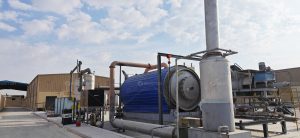
The industrial deployment of pyrolysis systems extends beyond plastic waste management. One notable application is the tyre to oil plant, which processes end-of-life rubber tyres into fuel oil, carbon black substitutes, and combustible gas. This mitigates the environmental burden of tyre accumulation while simultaneously recovering embedded petrochemical value. The heterogeneous composition of tyres—comprising elastomers, steel reinforcements, and carbon additives—requires robust thermal decomposition environments. Pyrolysis systems accommodate this complexity through staged heating profiles and controlled condensation pathways. The output streams are then reintegrated into manufacturing or energy sectors. Such multi-output valorization enhances resource efficiency. It also reduces reliance on linear extraction models that dominate traditional industrial paradigms. In this way, pyrolysis becomes a cross-sectoral enabler of material recirculation.
Integration with Thermal Desorption and Refining Systems
Advanced circular systems increasingly integrate pyrolysis with complementary remediation technologies. The tdu thermal desorption unit is often deployed for soil, sludge, and industrial residues contaminated with hydrocarbons. While thermal desorption focuses on volatilizing and separating contaminants at lower temperatures, pyrolysis equipment operates at higher thermal thresholds to chemically restructure remaining organic fractions. When combined, these systems form a layered purification and recovery architecture. Pre-treatment via thermal desorption improves feedstock homogeneity, while subsequent pyrolysis enhances energy recovery efficiency. This synergy reduces secondary waste generation and improves overall process entropy management. In industrial configurations, modular integration between thermal desorption and pyrolysis units allows operators to manage complex waste matrices with higher precision and lower environmental leakage.

Economic and Environmental Circularity Benefits
From an economic standpoint, pyrolysis-based systems reduce dependency on virgin fossil inputs and stabilize material procurement costs. Recovered oil and gas fractions can offset energy expenditures within industrial facilities, creating internal energy loops. Additionally, solid char by-products may be repurposed in construction materials or soil enhancement applications. On the environmental front, these systems contribute to landfill diversion and emission reduction by preventing uncontrolled decomposition of carbon-rich waste. A waste plastic pyrolysis plant operating under optimized conditions can significantly reduce the volume of persistent plastic pollution entering natural ecosystems. Meanwhile, the structured deployment of pyrolysis equipment enables industries to transition from linear consumption models toward regenerative material flows. The result is a more resilient industrial metabolism, characterized by reduced waste entropy and enhanced resource circularity.